

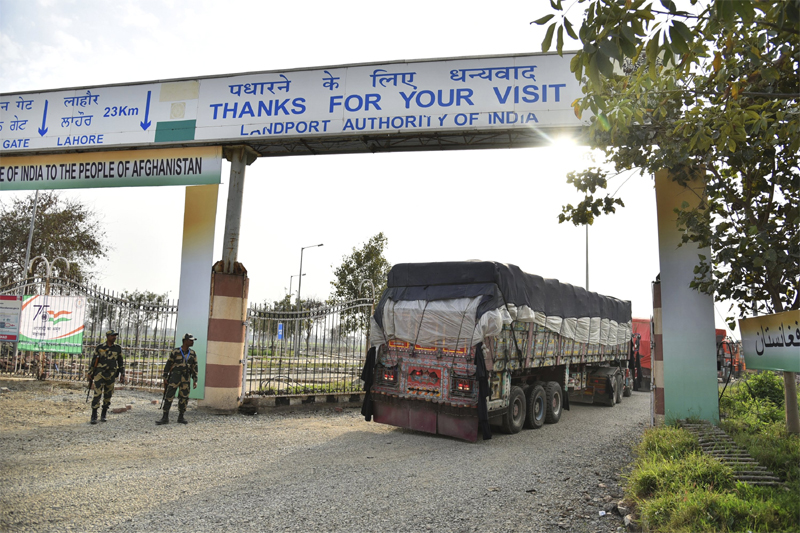
Cabinet Committee on Security has unveiled a series of retaliatory measures against Pakistan in response to a heinous terrorist attack on Pahalgam, which left 26 tourists dead. This series of actions marks a significant escalation in the already fraught bilateral relations between India and Pakistan. Among the most notable steps announced by the Government are the suspension of the Indus Waters Treaty, the expulsion of Pakistani military attaches, and the immediate closure of the Attari land-transit post. These moves signal a substantial deterioration in diplomatic ties, taking the two countries to another critical juncture in their complex and often hostile relationship.
The Pahalgam attack has ignited a fresh wave of anger and frustration. The attack was considered a direct assault on India’s territorial integrity and its progress, particularly in J&K. The timing of the attack-following the successful holding of elections in J&K and the region’s steady strides towards economic growth-appears to have been designed to disrupt India’s narrative of stability and development in the area. For India, this incident marks a stark reminder of the persistent threat of cross-border terrorism emanating from Pakistan, a concern that has long marred relations between the neighbours.
In its response, India has not only condemned the attack but also vowed to bring the perpetrators to justice. The Foreign Secretary has clearly stated that the perpetrators and their sponsors would be held accountable, signalling to pursue international avenues for justice, just as it had done in the case of Tahawwur Rana, one of the key figures in the 2008 Mumbai attacks.
The actions taken by India represent a clear shift from diplomatic protest to concrete punitive measures. The expulsion of Pakistani military attaches and the closure of the Attari Integrated Check Post-the only operational land border crossing between the two countries-are measures designed to isolate Pakistan diplomatically and economically. The suspension of the Indus Waters Treaty is perhaps the most significant and symbolic of these actions, as it affects one of the oldest water-sharing agreements between the two nations, established in 1960 under the mediation of the World Bank. The suspension of the IWT is an economic and strategic blow to Pakistan, as it has long relied on the flow of water from the rivers originating in India-controlled territories. IWT has long been viewed as one of the most successful examples of cooperation between India and Pakistan. By suspending the treaty, India is sending a powerful message to Pakistan about its unwillingness to tolerate what it perceives as Pakistan’s complicity in terrorism. The move, if prolonged, could have far-reaching economic consequences, potentially exacerbating water scarcity and affecting agricultural livelihoods in Pakistan.
Alongside the suspension of the IWT, India’s decision to expel Pakistani military attaches and close the Attari land-transit post further isolates Pakistan. The closure of the Attari Check Post, the only operational land border crossing, will impact trade and people-to-people contact. The measures will likely exacerbate the already strained economic and diplomatic relations, further hindering the prospects for meaningful dialogue or conflict resolution. The expulsion also represents a step away from traditional diplomatic channels.
Since independence, Pakistan’s hostility towards India has only intensified, despite India’s consistent efforts to act as a responsible neighbour, even offering friendship and support. From fighting two wars-including the one that led to the creation of Bangladesh-to being handed countless dossiers on terrorism, Pakistan has failed to learn from its past or mend its ways. Its repeated betrayals and attempts to harm India have now pushed relations to a breaking point. Prime Minister Modi, after initially extending a hand of friendship, has adopted a firm zero-tolerance stance on terrorism. With Pakistan now exposed and increasingly isolated on the global stage, it must recognise the gravity of the situation. If it continues down this path, India will have many other options, including direct action. Time is running out for Pakistan; it must act now against terrorism
 Follow our WhatsApp channel
