

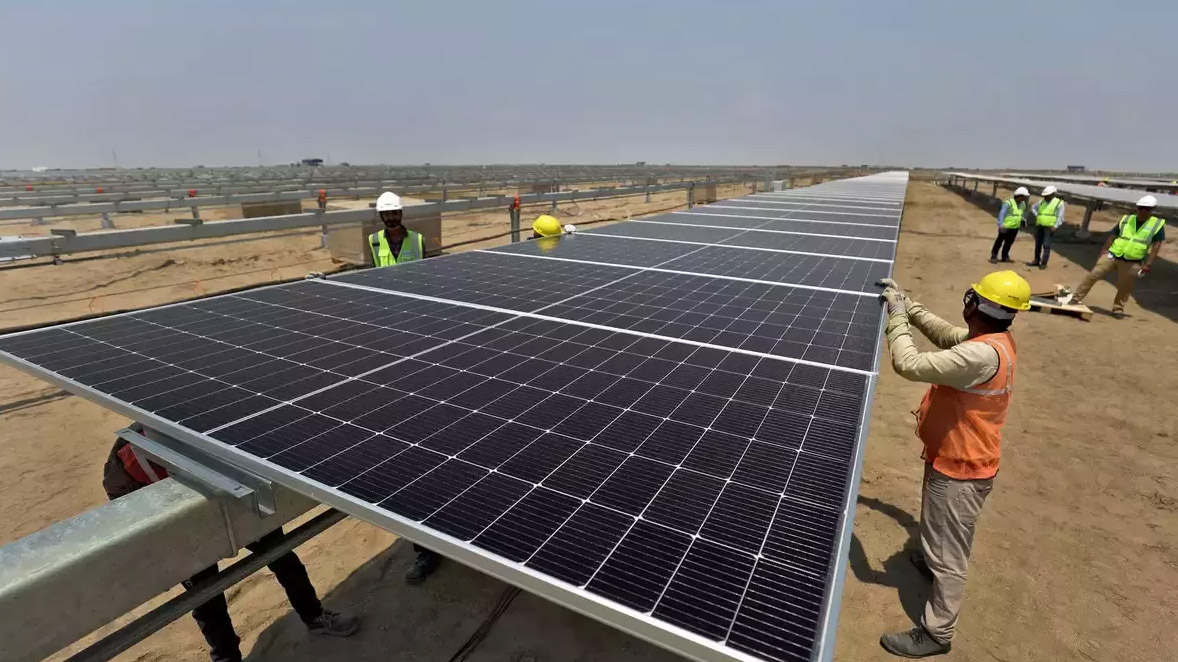
Jammu and Kashmir has rich resources with immense untapped potential; right now it is standing at a critical crossroads in its energy transition journey. The Union Territory has immense potential for renewable energy, particularly solar power, which is crucial to addressing the challenges of energy security, climate change, and sustainable development. Yet, several months after the much-touted announcement of creating a land bank for solar parks in the region, there has been no meaningful progress on this front. This delay reflects a broader issue of bureaucratic inertia and the lack of coordinated action across Government departments, which may ultimately hinder the realisation of J&K’s renewable energy ambitions.
Despite its vast hydroelectric potential, Jammu and Kashmir struggles to generate hydroelectricity as per estimates, a challenge worsened by the acute rainfall shortfall during recent summers and winters, leading to significantly reduced hydropower output. Hydropower projects also demand massive investments, lengthy environmental clearances, and years for completion, often resulting in the displacement of communities, destruction of forests, and disruption of wildlife habitats. In contrast, solar energy emerges as a far more viable renewable option-cost-effective, quicker to implement, and environmentally sustainable, with even a modest 3 KVA rooftop solar panel capable of producing over 20 units of electricity daily.
Keeping this situation in mind, the July 2024 announcement of creating a land bank for solar parks in J&K was hailed as a forward-thinking initiative to tap into the region’s vast solar energy potential. Given the region’s geographical location, J&K enjoys significant solar radiation throughout the year, making it an ideal location for large-scale solar power generation. The establishment of solar parks in the region would support India’s renewable energy targets and ensure a sustainable energy supply for J&K’s growing needs. Furthermore, the development of solar parks could bring numerous economic and environmental benefits, such as job creation, reduced greenhouse gas emissions, and enhanced energy independence.
However, despite the high expectations surrounding the announcement, no significant steps have been taken toward identifying suitable land for the establishment of solar parks. The Revenue Department, which is responsible for managing the vast majority of the land in the region, has ignored the land allocation requests. As a result, no progress has been made on this crucial initiative. The failure to identify land for solar parks is not just a bureaucratic oversight; it is a significant roadblock to realising J&K’s renewable energy potential. Most of the land is under the control of the Revenue and Forest Departments. Without their cooperation and support, it is nearly impossible to identify and allocate suitable land for solar parks. This highlights the need for greater coordination between various Government departments, as well as a more efficient and transparent land management system.
One of the most concerning aspects of the delay is that large tracts of land in the region remain under encroachment, while several Government-backed projects, including solar parks, languish due to the lack of land. The people of J&K have repeatedly witnessed Government announcements and initiatives fail to translate into action due to bureaucratic bottlenecks and a lack of political will. The current scenario raises fundamental questions about the efficacy of Government departments and their ability to collaborate effectively on projects that could benefit the region and its people.
Land allocation effort via the PM Gati Shakti portal is a lengthy process that will only add to the delays in realising the solar park initiative. Furthermore, the fact that the Government’s own announcement has not received the necessary support from key departments is troubling, as it underscores the challenges of implementing ambitious projects in J&K. The failure to take timely action on the solar park initiative is a missed opportunity for J&K, especially when the potential benefits of such projects are immense. Large-scale solar parks could generate a substantial amount of clean energy, contributing significantly to the region’s energy security. As the world moves towards cleaner energy sources, J&K must not fall behind in tapping into its solar potential.
 Follow our WhatsApp channel
